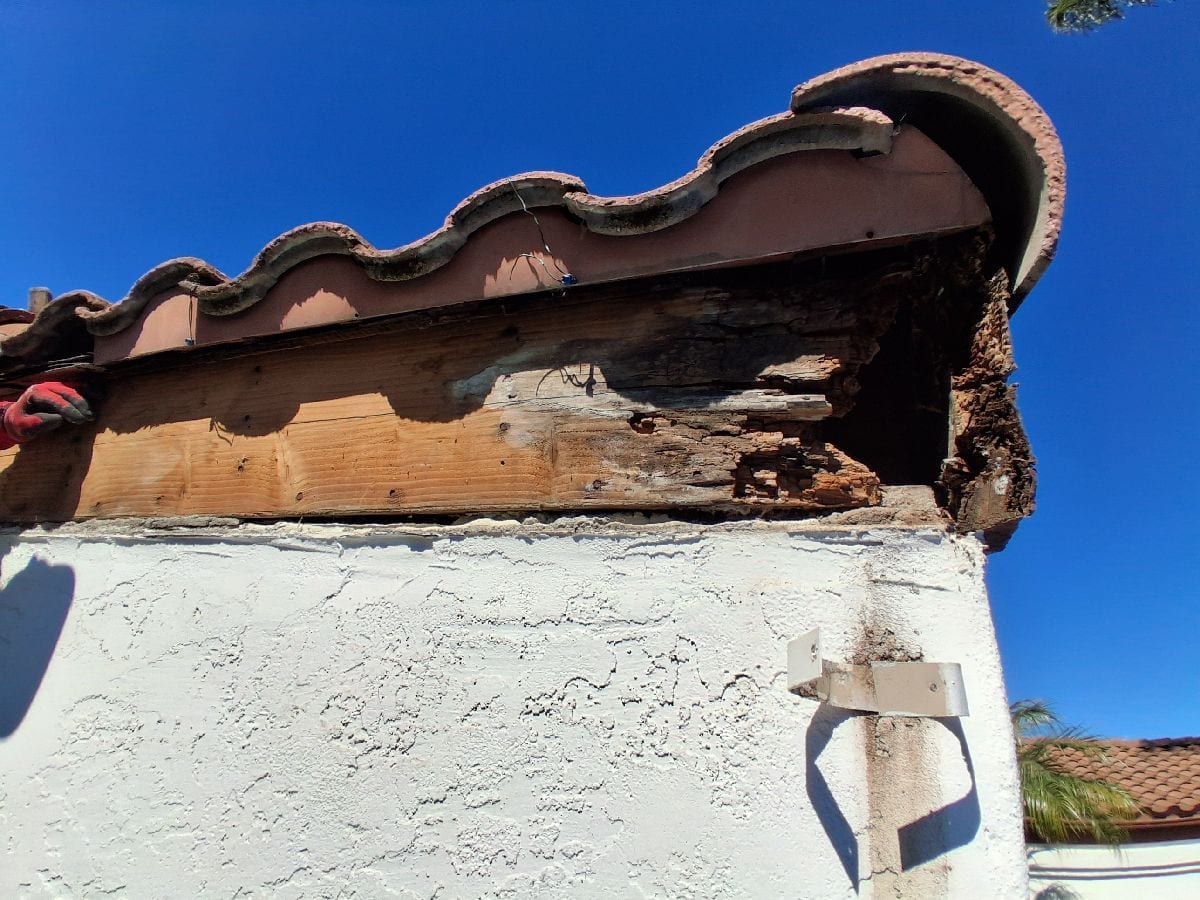
The symptom did not identify one cause
The video title establishes a leaking window and fascia rot, but its explanation does not assign everything to the window unit. That is the first lesson: water appearing at an opening does not prove the opening itself is the only failure. The wall above, roof edge, gutter behavior, flashing, wood condition, and previous work all belong in the evidence review.
The project involved multiple factors
The visible case explanation identifies a combination of gutter restriction, incorrect flashing, poor prior work, and insufficient maintenance. That makes a one-product fix an unsupported summary. For another property, the right response is to inspect comparable relationships and document differences. The case does not prove that any one of those four conditions exists at a new window-leak site.
Opening finishes changed the evidence
The video shows fascia or finish removed above a stucco wall and window, exposing roof-edge wood or framing. This supports controlled opening work when the relevant detail is concealed. It also shows why removal boundaries, temporary protection, photographs, and written change decisions matter. The visible opening does not provide dimensions or a standard demolition scope for another building.
The window-leak lesson
From a leak-tracing perspective, start above and around the symptom, compare rain behavior, and keep the window unit separate from adjacent wall and roof components in the proposal. A contractor should be able to say which component is being repaired and why. “Seal the window” is not a complete scope when the evidence includes roof-edge and flashing relationships.
The maintenance lesson has limits
The project explanation says maintenance could have reduced or prevented the damage and leak in that case. Maintaining gutters and visible joints can reduce avoidable exposure, but it cannot guarantee a leak-free wall. Roofing, flashing, openings, concealed drainage, plumbing, and other conditions still require property-specific review.
Use the original evidence responsibly
Watch the AWC video to see the project conditions and multi-factor explanation. Use it to form questions, not to select a repair detail for another property. Current rain history, safe photographs, accessible conditions, authorized opening work, and any necessary qualified review must control the new scope. Keep unknowns and exclusions visible in the written proposal.
Limits of this case study
This case study does not provide measured quantities, a product schedule, a formal inspection record, or a performance test that can be applied to another building. It should guide better leak-tracing questions rather than supply a standard detail. Another property needs its own rain history, accessible observations, investigation limits, and written repair scope.
Use the documented case to broaden the investigation around the opening, while letting current property evidence control the repair.
Watch the AWC field context
Case Study — What caused the fascia to rot and the window to leak?
All World Construction LLC video showing how gutter, flashing, prior-work, and maintenance conditions contributed to one fascia-rot and window-leak case.
Continue planning
When Water Above a Window May Start at the Roof Edge
Trace relationships among gutters, fascia, flashing, roof edges, walls, and openings without assuming one visible defect is the only source.
Read the guideSealant, Flashing or Opening Work for a Window Leak?
Compare three common repair paths and learn what evidence should support each before work begins.
Read the guide